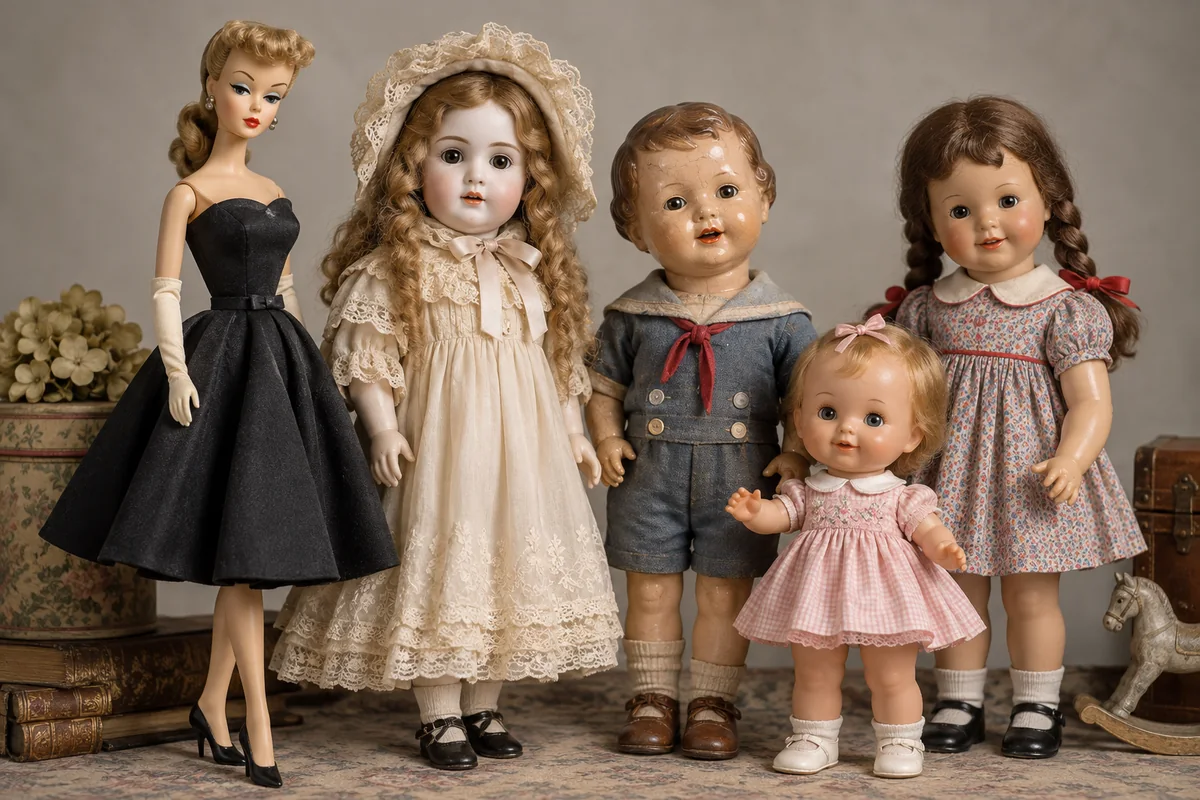
Record first, name second
Before trying to identify or price doll display and storage, photograph the doll exactly as found. Include full front and back views, both profiles, the face, hairline or wig edge, the back of the head, neck and torso marks, hands, feet, joints, and every clothing layer. Photograph boxes, stands, tags, shoes and accessories separately but keep the grouping together.
Then write a neutral physical description. Do not begin with “rare,” “mint,” or even a maker name unless the evidence already supports it. A useful note records material, height, mark, body type, eye style, hair construction, clothing and every obvious fault. That gives you something testable.
The diagnostic core
For doll display and storage, concentrate on material type, weight, joints, stand contact points, light exposure, humidity, textile support, dust and neighboring materials.
No one clue should be forced to carry the identification. Marks can be reused across body generations. Outfits can be moved. Wigs can be replaced. Bodies can be restrung or married. Boxes can be swapped. Confidence rises when several independent components agree.
Build a component map
| Component | Record | Why it matters |
|---|---|---|
| Head / face | Material, mold/mark, paint, eyes, mouth, ears, hair | Often the strongest maker/model evidence |
| Body | Material, marks, jointing, proportions, skin tone, repairs | Tests whether the head/body combination is historically coherent |
| Hair | Wig or rooted, fiber, rooting pattern, haircut, reroot, glue | Original hair can identify version and condition |
| Eyes | Painted, glass, sleep, decal, mechanism, resets | Eye type and setting can separate models and reveal restoration |
| Clothing | Tags, fabric, seams, fasteners, fit, accessories | Can identify an issue but is easily mixed |
| Packaging | Box label, insert, stand, tags, paperwork | Powerful evidence when the match is exact |
Marks: transcribe before interpreting
Copy every letter, number, slash, symbol and country name exactly. Note where the mark sits and whether it is incised, raised, stamped, printed or molded. Use raking light and multiple photographs instead of rubbing pencil, chalk or ink into old marks.
Do not assume a copyright or patent year is the manufacturing date of the individual doll. Molded legal information can remain in use across multiple production years or body versions. The mark is one part of the chronology.
Originality is component-by-component
A doll is not simply “original” or “not original.” An original head can sit on a replacement body. Original eyes can be reset. A period wig can be wrong for that doll. Clothing can be genuine vintage but from another model. A branded box can be married later.
Describe each component separately. This makes both identification and valuation cleaner and avoids turning normal collector maintenance into a moral judgment.
Condition: name the actual problem
Words such as “excellent,” “good,” and “minty” are too vague by themselves. State the issue: bisque hairline at the crown, composition crazing with lifting paint, cloudy sleep eye, missing finger, discoloration, tacky vinyl, wig thinning, elastic replacement, repaint, stained dress, broken box corner.
That language is far more useful than a numerical condition score because different doll materials fail in different ways.
Clothing, shoes and accessories need their own identification
Remove clothing only when the material can tolerate safe undressing. Photograph every layer before separation. Check tags, seams, fasteners and scale. Shoes and hats can be especially easy to swap because many are visually similar at listing-photo resolution.
Period clothing is not automatically original-to-the-doll. Handmade clothing can also be historically important if it came with the collection. Preserve the association and label it honestly.
How restoration changes the comparison set
Restoration can range from ordinary restringing to a full face repaint, replacement wig, reset eyes, rebuilt fingers and extensive composition resurfacing. A restored doll can be beautiful and collectible. The market error is comparing it directly with a high-condition original example and calling the difference a bargain.
If restoration is hard to map, inspect under magnification and raking light. Look for paint that bridges cracks, new material in chips, glue residue, fresh elastic, mismatched wear and unusually clean components beside heavily aged ones.
Value: compare the exact configuration
Safe display protects condition and documentation; stands and boxes should support the doll without staining, crushing or stressing joints.
Useful sold comps match maker/model or mold family, size, material, head/body combination, hair and eye state, clothing completeness, box status, condition and restoration. A famous maker name is not enough. Neither is age.
Build a range from several good sales. When one result is much higher or lower, ask why before letting it move your estimate.
doll display and storage: current inventory + sold evidence
These are persistent searches in eBay’s Dolls, Clothing & Accessories category with the DollGuide.co EPN campaign and article-level custom IDs attached.
A better sold-comps worksheet
| Variable | Strong match? | Reject or downgrade when… |
|---|---|---|
| Exact identity | Required | Different maker/model/mold or uncertain ID |
| Size / body | Strongly preferred | Different body or height changes the issue |
| Originality | Required | One doll is married/repainted and the other untouched |
| Condition | Important | Cracks, crazing, stains or missing parts differ substantially |
| Clothing | Important | Nude and complete tagged outfit are averaged together |
| Box / paperwork | Important when present | One set is complete and another is loose |
| Sale format | Context | Bulk estate lot is used to price one researched doll |
Buying checklist
- Front, back, profiles and full-body photographs
- Clear maker/mold/body mark images
- Exact height and relevant measurements
- Hair, eyes and body described separately
- Cracks, crazing, stains, odors and repairs disclosed
- Original versus replacement parts stated plainly
- Clothing and accessories identified separately
- Box and paperwork matched rather than assumed
- Return terms saved
- Several genuinely close sold comps reviewed
Selling: make the evidence visible
A good listing reduces uncertainty. Lead with the exact identification you can support, then measurements, marks, material, clothing, condition and restoration. If you do not know whether a component is original, say “unknown” instead of turning uncertainty into a marketing claim.
Photograph faults as carefully as the face. Serious collectors do not expect antique and vintage dolls to be perfect; they do expect to know what they are buying.
Preservation before improvement
Do not wash faces, oil composition, scrub bisque, use harsh creams on vinyl, soak clothing, polish eyes or force mechanisms before documentation. Some common home treatments can permanently alter surfaces, dyes or plastic chemistry.
When treatment is needed, work from the least invasive method and preserve a written record of what was done.
Keep the evidence together
Assign a collection number and keep photographs, measurements, original labels, receipts, seller correspondence, boxes, clothing and accessories linked to that number. If you later sell the doll, this becomes provenance and supports an honest description.
Ten-minute inspection sequence
Start with the doll fully assembled and clothed. Photograph that state before removing anything. Then inspect the head and face under diffuse light, followed by the hairline or wig edge, eyes and ears. Move to the maker or mold marks and photograph them at several angles. Measure the doll only after the basic condition record exists.
Next inspect the body. Look for neck-fit mismatch, different skin tones, fresh elastic, replaced limbs, cracks hidden by clothing, and hardware that does not match surrounding wear. Examine clothing one layer at a time, with special attention to labels and fasteners. Put each piece beside the doll in a single inventory photo so nothing becomes detached from its history.
Finish with packaging and paperwork. Compare box size, model wording, tags and accessories to the physical doll. Write down every uncertainty instead of resolving it by assumption. “Body may be later” is better documentation than silently declaring the whole doll original.
Three confidence levels make research cleaner
Confirmed: several independent features and reliable references agree. Probable: most evidence agrees but one key component or piece of documentation is missing. Unresolved: important evidence conflicts or the doll has been altered enough that the exact version cannot yet be established.
Use the confidence level in your own catalog and listing drafts. It prevents a tentative identification from slowly becoming “fact” just because it has been copied from note to note.
FAQ
What should I verify first with doll display and storage?
Start with material type, weight, joints, stand contact points, light exposure, humidity, textile support, dust and neighboring materials. Record those features before cleaning, restringing, dressing or separating accessories.
Can replacement parts still be acceptable?
Yes. A doll can remain collectible with replaced eyes, wig, body parts, elastic or clothing when the changes are disclosed. Compare restored or married examples with similar examples rather than untouched originals.
Should I trust the date molded into the doll?
Treat copyright, patent and mold information as clues, not automatically as the manufacturing date of the individual doll. Cross-check construction, markings, body, clothing and packaging.
Are current asking prices a good value guide?
No. Completed sales are more useful when examples match in identity, size, material, originality, condition and completeness.
What should I save with the doll?
Keep photographs, original boxes, clothing, shoes, tags, stands, paperwork, receipts and collector notes together. Context often resolves identification questions later.
Core DollGuide.co references
DollGuide.co provides independent educational collector information, not a formal appraisal, conservation treatment, certificate or guarantee of authenticity. Brand names are trademarks of their respective owners; DollGuide.co is not affiliated with them.